Archives
- 2026-06
- 2026-05
- 2026-04
- 2026-03
- 2026-02
- 2026-01
- 2025-12
- 2025-11
- 2025-10
- 2025-09
- 2025-03
- 2025-02
- 2025-01
- 2024-12
- 2024-11
- 2024-10
- 2024-09
- 2024-08
- 2024-07
- 2024-06
- 2024-05
- 2024-04
- 2024-03
- 2024-02
- 2024-01
- 2023-12
- 2023-11
- 2023-10
- 2023-09
- 2023-08
- 2023-07
- 2023-06
- 2023-05
- 2023-04
- 2023-03
- 2023-02
- 2023-01
- 2022-12
- 2022-11
- 2022-10
- 2022-09
- 2022-08
- 2022-07
- 2022-06
- 2022-05
- 2022-04
- 2022-03
- 2022-02
- 2022-01
- 2021-12
- 2021-11
- 2021-10
- 2021-09
- 2021-08
- 2021-07
- 2021-06
- 2021-05
- 2021-04
- 2021-03
- 2021-02
- 2021-01
- 2020-12
- 2020-11
- 2020-10
- 2020-09
- 2020-08
- 2020-07
- 2020-06
- 2020-05
- 2020-04
- 2020-03
- 2020-02
- 2020-01
- 2019-12
- 2019-11
- 2019-10
- 2019-09
- 2019-08
- 2019-07
- 2019-06
- 2019-05
- 2019-04
- 2018-11
- 2018-10
- 2018-07
-
br Experimental Procedures br Author Contributions
2020-04-13
Experimental Procedures Author Contributions Acknowledgments Introduction The intestinal mucosal barrier surface is constantly exposed to food antigens, beneficial microbes, pathogens, and a multitude of other environmental stimuli (Turner, 2009). Innate lymphoid AG-126 australia (ILCs)
-
br EBV Infection Epstein Barr virus EBV human herpesvirus wa
2020-04-13
EBV Infection Epstein–Barr virus (EBV, human herpesvirus 4) was discovered 50 years ago, when Epstein, Achong, and Barr used electron microscopy to identify viral particles in Burkitt\'s lymphoma cells. It belongs to the lymphocryptovirus (LCV) genus of the gammaherpesvirus subfamily (Fig. 1A). T
-
Inflammation is critical in the pathobiology of atherosclero
2020-04-13

Inflammation is critical in the pathobiology of atherosclerosis. The inflammatory mediators impacted by FBXO3 described herein i.e. NF-κB, IL-1β, and TNF-α, and IL-8 have purported causal roles in atherosclerosis. For example, NF-κB activation is increased in mononuclear cells in human plaques [29]
-
If the unwanted objects detected by OpenComet are
2020-04-13
If the unwanted objects detected by OpenComet are manually deleted, and then the DNA (%) in tail is computed, the performance of the present method can be compared more effectively. Therefore, performance of OpenComet is analysed in two ways as Approach 1 and Approach 2. Approach 1, considers the DN
-
P falciparum DHFR TS is a particularly
2020-04-13
P. falciparum DHFR-TS is a particularly important enzyme, because it is from the protozoan species that is associated with most malaria infections. Since this enzyme is responsible for catalyzing sequential reactions in the thymidylate cycle, its inhibition slows malarial dTMP production and therefo
-
Besides degrading cholesterol the cholesterol degradation pa
2020-04-13
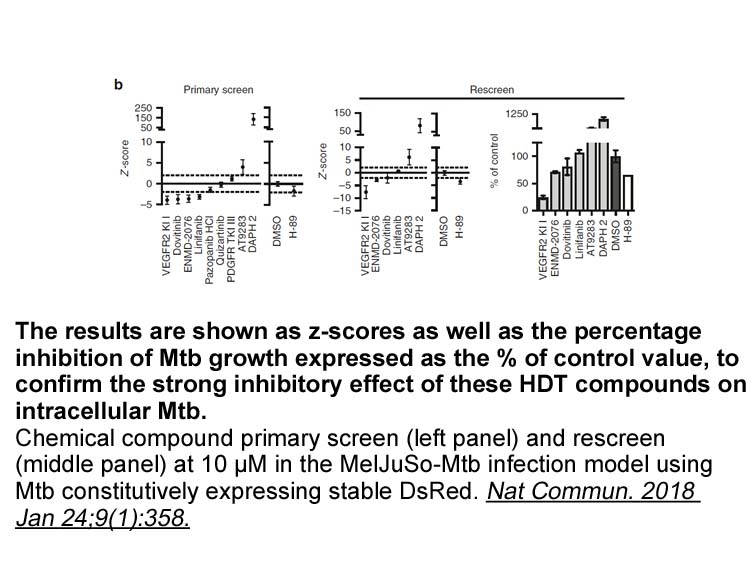
Besides degrading cholesterol, the cholesterol degradation pathway also offers a route to obtain useful starting materials for the production of steroid drugs and hormones. Indeed, steroids are among the most marketed pharmaceuticals with about 300 approved steroid drugs [15] and a worldwide market
-
RCT pathway plays a critical role in the
2020-04-13
RCT pathway plays a critical role in the maintenance of cholesterol homeostasis by facilitating the cholesterol clearance and cholesterol efflux (Levinson & Wagner, 2015). In the process of RCT, ABCA1 and ABCG1 played as crucial regulators in cholesterol efflux (Yasuda et al., 2011). Compared with h
-
br Loss of Chk sensitizes cells to hypoxia reoxygenation
2020-04-13
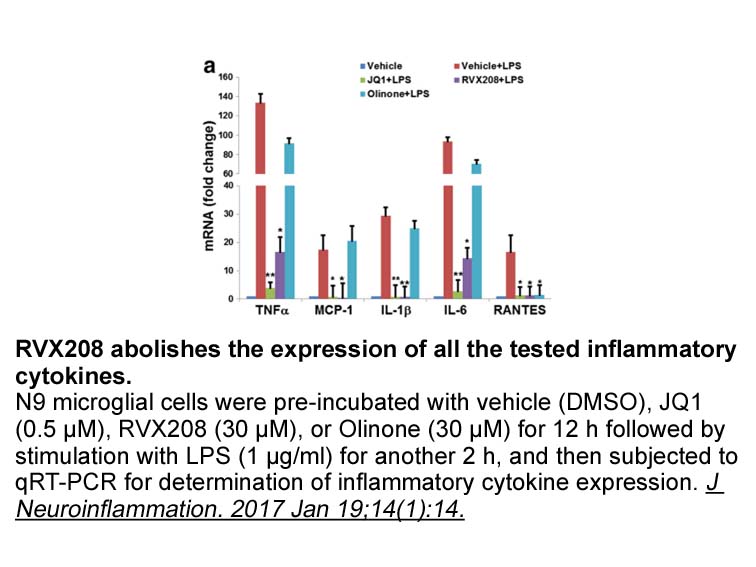
Loss of Chk 1 sensitizes Guanethidine Sulfate to hypoxia/reoxygenation In contrast to Chk 2, studies have identified Chk 1 as being phosphorylated in an ATR-dependent manner at residue serine 345 during hypoxia [18]. More recently, siRNA mediated inhibition of Chk 1 signaling was found to sensit
-
Nitric oxide synthase NOS is a predominant enzyme of
2020-04-13
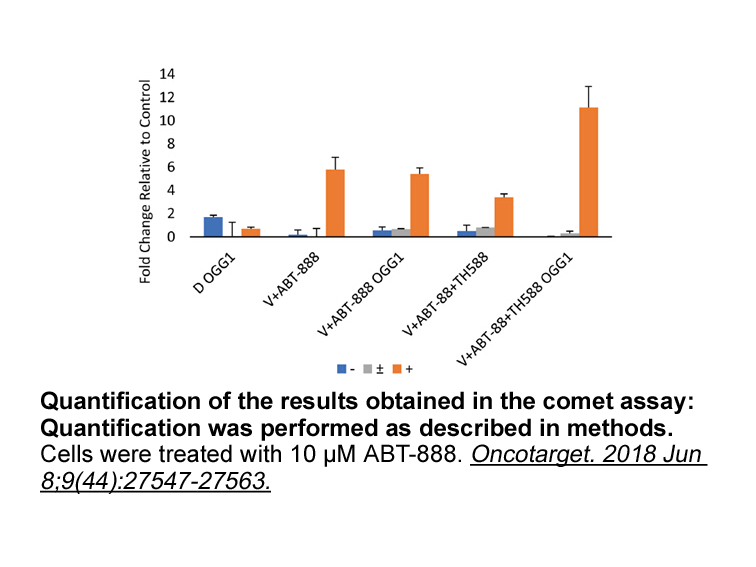
Nitric oxide synthase (NOS) is a predominant enzyme of immune system, which elaborates nitric oxide (NO) from the amino Fmoc-D-Phe(4-Cl)-OH arginine (Arg). NO mediates vasodilatation, blood pressure regulation, neurotransmission, host defense, and macrophage-mediated immunity, among an array of oth
-
Because of the lack of sequence
2020-04-13
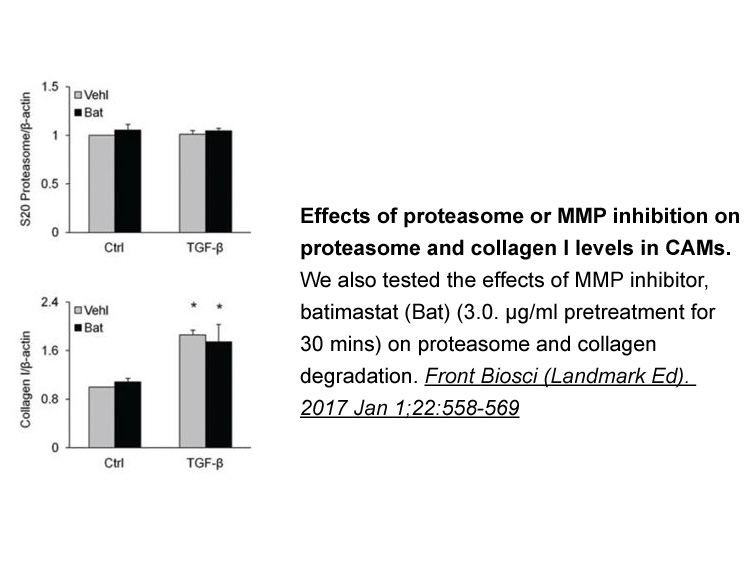
Because of the lack of sequence, current knowledge on the cellular regulation of CoA-IT is scarce. However, recent work has suggested an interesting new role for CoA-IT in regulating the extent of the AA mobilization response in primed macrophages. Bacterial lipopolysaccharide (LPS) is a poor trigge
-
br Cytochrome P monooxygenases Cytochrome P monooxygenases P
2020-04-13
Cytochrome P450 monooxygenases Cytochrome P450 monooxygenases (P450s) belong to one of Nature’s most versatile group of enzymes for C–H functionalization and are able to perform challenging regioselective and stereoselective activations of remote, unactivated C(sp3)–H bonds, for which there are o
-
br Cytokines potent mediators of ILC function The
2020-04-13
Cytokines – potent mediators of ILC function The different ILC players are portrayed in three categories, ILC1, ILC2 and ILC3, based on the cytokines they produce and transcription factors (TFs) that guide their differentiation [8] (Figure 1). Cytokines are the most extensively studied stimuli fo
-
Pursuant to our in vitro data that
2020-04-10
Pursuant to our in vitro data that neutrophilic elastase activated the elastase-dependent oncolytic virus, we initially hypothesized that tumor-infiltrating neutrophils could be the source for elastase in tumor tissue. However, we did not detect neutrophils in the PANC-1 tumor tissue where we observ
-
br Discussion Although DNA has a limited
2020-04-10
Discussion Although DNA has a limited chemical stability it has long been known that DNA in blood stains may remain relative stable for weeks, months, or even years at ambient temperature,1, 2, 3, 4, 5, 6 and samples (e.g., reference samples) that have been transferred to a matrix, e.g., FTA® pap
-
Environmental cues such as microbial dietary and
2020-04-10
Environmental cues, such as microbial, dietary, and neuronal signals, regulate the differentiation and function of ILC3s. However, the identities of any additional cues and the receptors that detect them remain unknown. An important class of proteins enabling cells to sense extracellular cues are G-
16673 records 896/1112 page Previous Next First page 上5页 896897898899900 下5页 Last page